
Gutter cleaning
A clear pipe does not help if the trough above it is full. We clear every run by hand and flush the downspouts on the same visit.
Gutter cleaning detailsDownspout cleaning clears the vertical pipes that carry water from your gutters to the ground. A downspout can look fine from the yard and still be packed solid at the first elbow. Fast Pro clears the blockage, flushes the pipe with water, and flushes any buried drain line the downspout feeds.
Serving homeowners across Florida. 6+ years on Florida homes. 2,500+ jobs completed. Last updated .
Every downspout visit includes
Free inspectionMost overflow starts in the pipe, not the trough. A blockage almost always sits at one of five spots, and each leaves its own clue.
| Spot | What gets stuck | Warning sign |
|---|---|---|
| The top outlet | Palm fiber, seed pods, and clumps of wet leaves where the trough drops into the pipe. | The gutter overflows right above the downspout. |
| The elbow near the roofline | Pine needles and oak catkins that bend around the curve and pack together. | Water backs up the whole run behind it. |
| The straight run | Rarely a problem on its own, but a plug from above can wedge here. | The pipe stays dry in the rain, or feels heavy when you tap it. |
| The bottom bend | Sand, shingle grit, and mud that settle where the pipe turns outward. | Water trickles out the bottom long after the rain stops. |
| The buried line | Silt, roots, and debris carried underground from the downspout. | Standing water near the outlet or a soggy patch in the yard. |
The first two spots cause most of the calls we get. That is why a gutter that looks clean from the ladder can still overflow. The trough was fine, and the pipe was not. Our gutter cleaning visit includes the flush for this reason.
Six steps, in the same order on every pipe.
We pour water in at the top and watch the bottom. A steady flow means the pipe is open. A trickle or a dry outlet tells us the plug is packed, and the way the water backs up tells us roughly where it sits.
The outlet is where palm fiber and seed pods collect first. We pull that debris out of the trough and out of the mouth of the pipe before we send any water down.
Wet needles and leaves pack tight at a bend. We loosen them from the top and from the bottom opening so they move as a mass instead of wedging deeper.
Water runs from the top until it comes out of the bottom at a steady rate. If it slows again, we go back to the bend and repeat. We keep flushing until the flow stays steady.
We look at where the water lands. A splash block, an extension, a pop-up emitter in the yard, or a buried line each get their own check, and we tell you if water is dumping against the wall.
You get a before and after photo of each downspout and a plain note on anything that needs a repair or an extension.
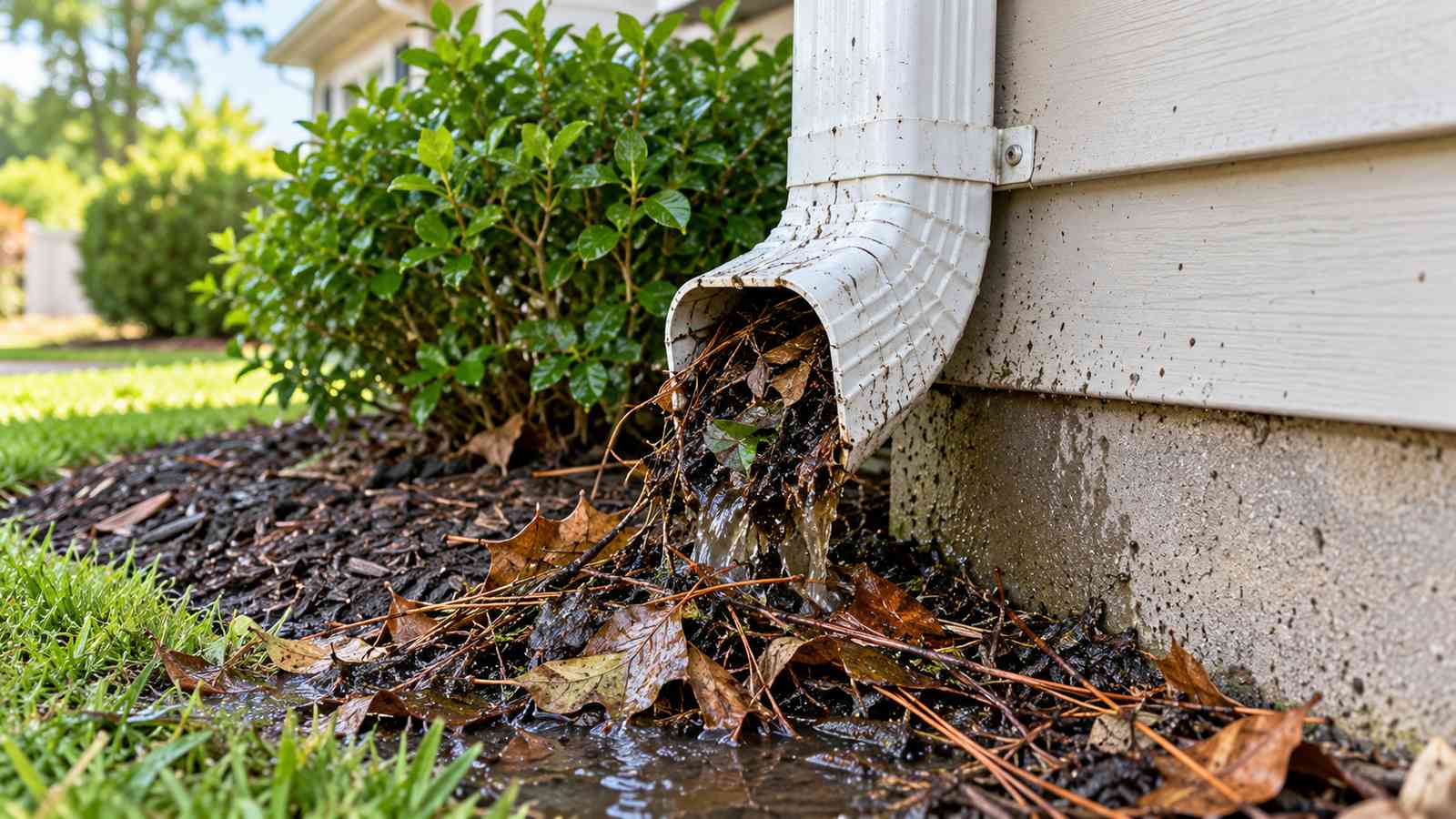
A packed elbow like this one is the usual reason water backs up the gutter.
A clear pipe still has to put the water somewhere useful. These are the four endings we see most, and what we look at on each.
On a flat Florida lot there is little slope for water to run away on, so the last few feet matter. A downspout that dumps at the wall puts water exactly where you do not want it, even when the pipe itself is clear.
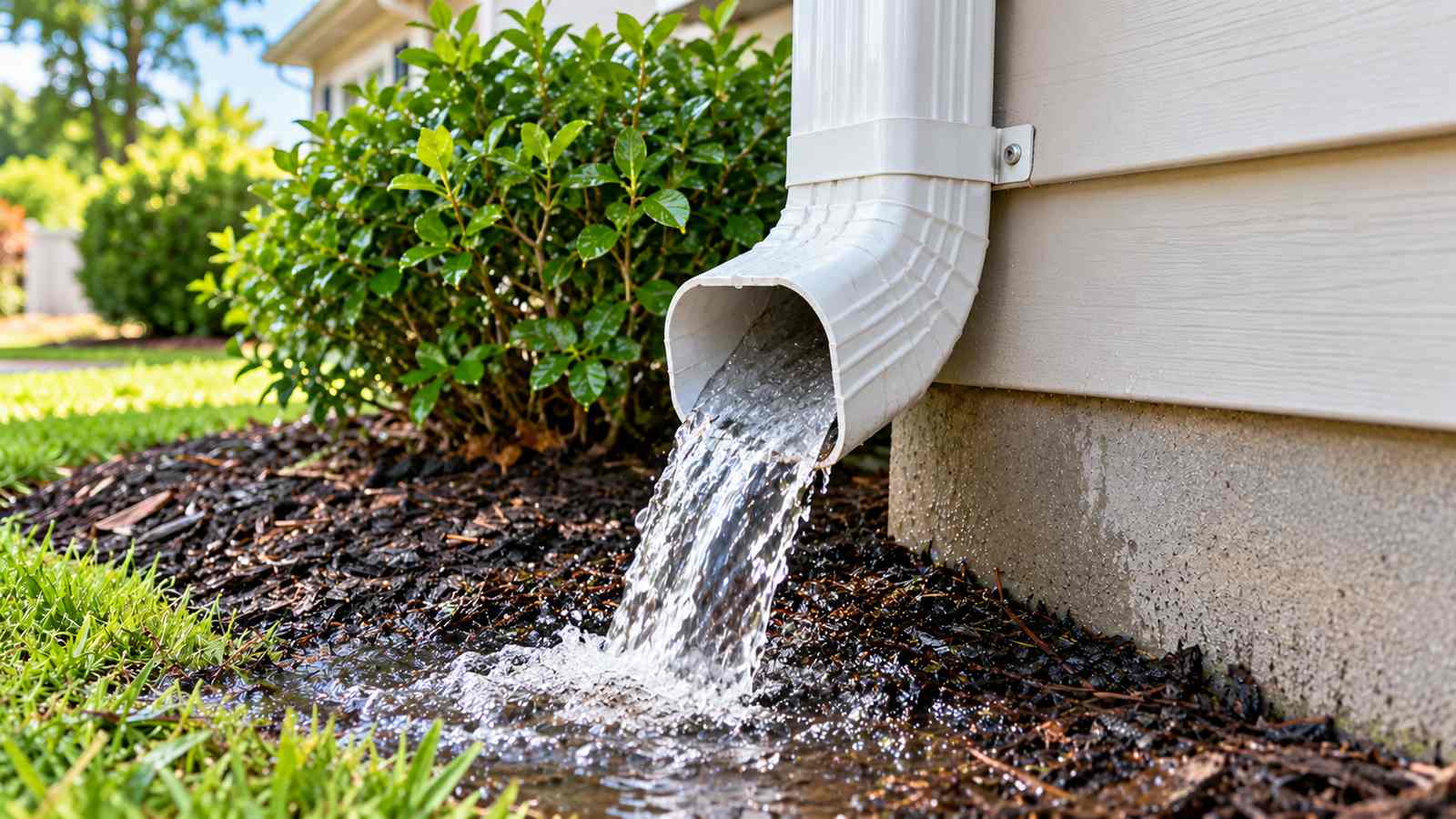
The photo pair shows one downspout before and after we cleared it.
Watch the pipes the next time it rains hard. These signs show up within minutes.
They are two parts of one path, and we usually do both in a single visit.
| Gutter cleaning | Downspout cleaning | |
|---|---|---|
| Where it works | The trough along the roofline | The vertical pipe and any buried line |
| What it removes | Palm fiber, catkins, pollen, grit | Plugs at elbows and outlets, silt in drain lines |
| How we confirm it | We rinse the trough toward the outlet | We run water until it exits steadily |
See the gutter cleaning page for the trough side of the job.
If your downspouts tie into an underground pipe, we flush that line with water from the downspout end and watch where it comes out. That clears silt, loose debris, and most plugs that started in the gutter. We do not dig, and we do not repair pipe.
If the line stays blocked after a thorough flush, the cause is usually roots, a crushed section, or a connection that has come apart. We will tell you what we saw, show you the photo, and point you to a drain or plumbing specialist rather than guess.
The quote depends on the pipes as much as the house. These are the details that matter.
Tell us how many downspouts you have and whether any go underground. We quote by phone before we book.
Call (813) 856-2726The downspout is the last stop on the way from the roof to the ground, so it pairs with everything above it.
A clear pipe does not help if the trough above it is full. We clear every run by hand and flush the downspouts on the same visit.
Gutter cleaning detailsGuards keep fronds out of the trough, but pollen and seed pods still wash down into the pipe. We clean the guards and flush the downspouts.
Gutter guard cleaning detailsOverflow at a blocked downspout leaves streaks down the gutter face. Once the pipe flows, we can wash the streaks off.
Gutter brightening detailsA roof wash sends shingle grit and dead algae down the gutters. We flush the downspouts afterward so none of it settles in a bend.
Roof pressure washing detailsPine-heavy yards in Duval, Orange, and Leon County send needles into the pipes. Palm fiber is the usual culprit in Broward and Palm Beach. We plan the flush around what your trees drop.
Miami, Homestead, Florida City, Kendall
See Miami-Dade CountyFort Lauderdale, Pembroke Pines, Coral Springs, Hollywood
See Broward CountyWest Palm Beach, Boca Raton, Boynton Beach, Delray Beach
See Palm Beach CountyNaples, Marco Island, Golden Gate, Ave Maria
See Collier CountyFort Myers, Cape Coral, Bonita Springs, Estero
See Lee CountySarasota, Venice, North Port, Siesta Key
See Sarasota CountyTampa, Brandon, Riverview, Plant City
See Hillsborough CountyOrlando, Winter Park, Apopka, Ocoee
See Orange CountyJacksonville, Jacksonville Beach, Atlantic Beach, Neptune Beach
See Duval CountyTallahassee, Lake Jackson, Woodville
See Leon CountyNot sure we cover your town? Call us at (813) 856-2726 with your address.
The clearest sign is water pouring over the gutter edge near one corner while the rest of the run stays calm. Other signs are a downspout that stays dry during a heavy rain, drips at the elbow joints, and a gurgling sound as water backs up.
Something is slowing the water inside the pipe. Wet pine needles and palm fiber lodge at the top elbow, seed pods plug the outlet, and sand settles in the bottom bend. On a buried line, silt or tree roots can block the pipe underground.
We start at the top outlet, pull out the packed debris by hand, and break up what has wedged at the elbow. Then we run water down the pipe until the flow is steady at the bottom. If water still backs up, we check the discharge point and any buried line.
It is a buried pipe that takes the water from one or more downspouts and carries it away from the house, usually to a pop-up emitter in the yard, the street, or a drain structure. Silt, roots, and debris can block it just like an above-ground pipe.
We can flush the line with water from the downspout and check where it comes out. If the line stays blocked after flushing, we tell you what we found. A collapsed pipe or a root mass needs a drain specialist, and we will say so plainly.
Yes. We run water through every downspout on every gutter cleaning visit and watch it reach the ground. A downspout cleaning booked on its own follows the same steps without the work on the gutter trough.
On a flat lot, usually yes. An extension carries the water several feet past the foundation, so it does not pool against the slab. We check where each downspout lands and tell you when the outlet is dumping right at the wall.
They can contribute. Water that spills at the wall soaks the soil beside the slab, washes out mulch, and can pool near the foundation. Clearing the downspout and pointing the outlet away from the house removes that source of water.
Most need a flush every time the gutters are cleaned, which is two to four times a year depending on the trees. Downspouts under live oaks, pines, and palms clog fastest. Buried drain lines usually need attention less often, but check them after a major storm.
Often, yes. Run the hose from the top and watch the bottom. If the water backs up or trickles, the blockage is packed tight, and forcing it with a hose can drive the plug into the bend. At that point it is easier to have a crew clear it from the top.
Yes. Storm debris packs the elbows, and heavy rain over a few days can push silt into buried lines. We clear the outlets, flush every pipe, and send photos of the water leaving each downspout.
We serve homeowners across Florida. The counties we serve page lists each county and its main cities. If your town is between those, call and ask about your street.
Call and tell us how many downspouts you have and where they drain. We quote by phone and find a day that works.
Call (813) 856-2726