
Gutter cleaning
We clear the trough first, so the roof rinse runs clean. Done together, it saves a second visit.
Gutter cleaning detailsRoof pressure washing is the cleaning of a roof to remove black streaks, algae, mold, and moss. On a roof we do it with low pressure and a roof-safe cleaner, called a soft wash, because high pressure can damage shingles. Fast Pro washes shingle, tile, and metal roofs for homeowners across Florida.
Serving homeowners across Florida. 6+ years on Florida homes. 2,500+ jobs completed. Last updated .
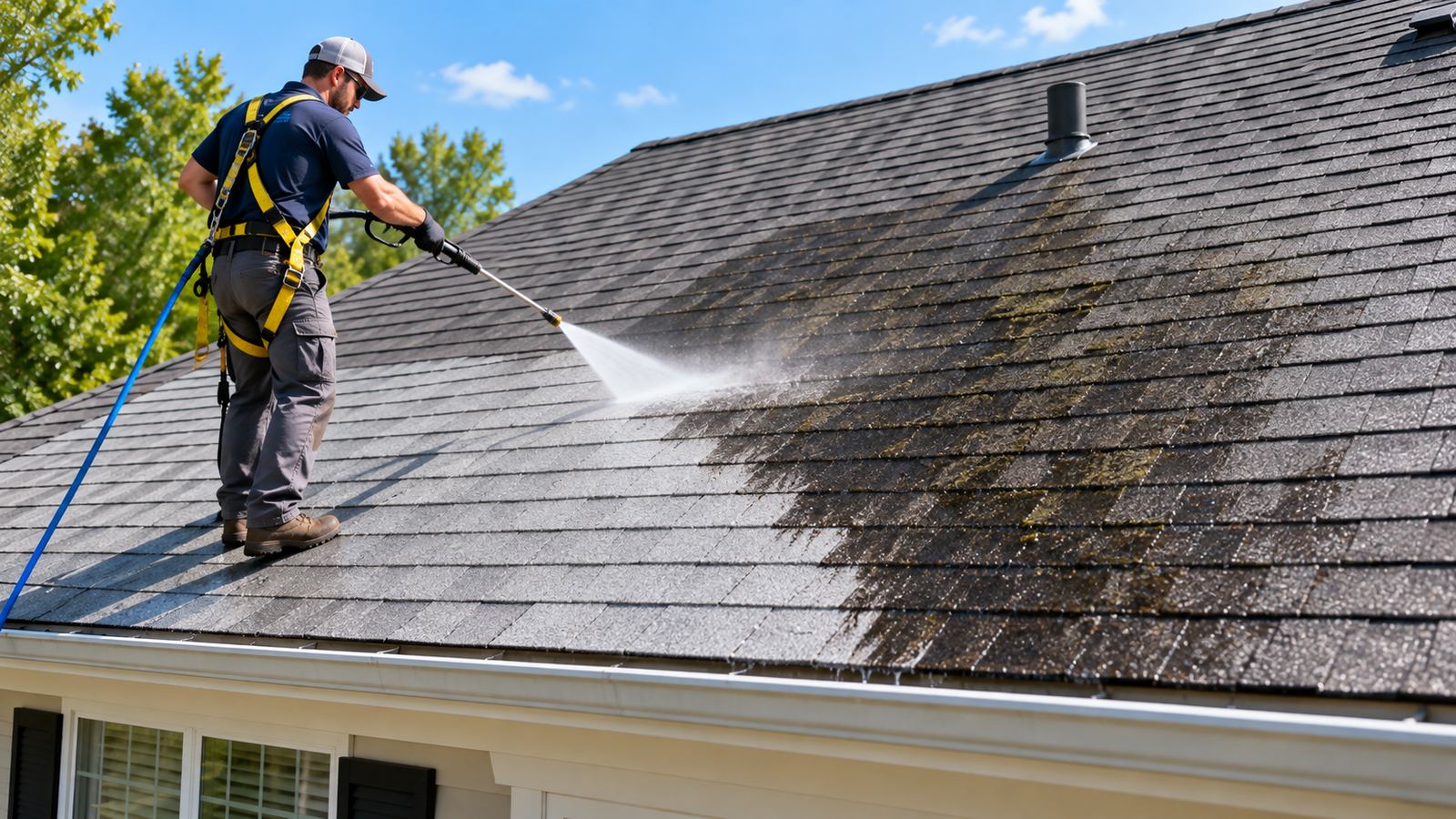
Every roof wash includes
Low pressure onlyThey are living organisms, which is why wiping or hosing them rarely works.
The dark streaks on Florida roofs are a cyanobacterium called Gloeocapsa magma. It lands on damp shingles, feeds on the limestone filler in the asphalt, and darkens as it grows to protect itself from the sun. It travels on the wind, so a clean roof next to a streaked one will not stay clean forever. The Asphalt Roofing Manufacturers Association reports that this algae discoloration is most widespread in the Gulf States, and Florida is one of them.
Streaks show first on north-facing slopes, shaded sections, and the lower edge of the roof where moisture lingers. Left alone, the growth holds water against the shingles, and the roof sheds more granules into your gutters.
The word pressure is in the service name because that is how people search. The method is low pressure.
The Asphalt Roofing Manufacturers Association says high-pressure washing is likely to damage asphalt roofing and tells owners not to use a power washer or a brush on algae. High pressure strips the protective granules, can drive water under the shingles, and takes off the surface growth while leaving the roots, so the streaks come back sooner.
| On your roof | High-pressure blasting | Our low-pressure soft wash |
|---|---|---|
| Shingle granules | Knocked off, which shortens roof life | Left in place |
| Algae | Surface growth removed, roots stay | Cleaner kills the growth at its base |
| Water intrusion | Can force water under shingles and around flashing | Gentle flow that follows the way rain already runs |
| Tile and metal | Can chip tile edges and scar coatings | Safe on shingle, tile, and metal when done with care |
| Manufacturer guidance | Advised against for asphalt shingles | The approach manufacturers point to |
The order matters, because the runoff goes into your gutters.
We look at the roof material, the pitch, the amount of growth, any loose or cracked pieces, and how we can reach every slope safely.
Debris comes out of the trough and downspouts before any cleaner goes on, so the rinse water has a clear path to the ground.
Shrubs, flower beds, and anything near the walls get covered or soaked with fresh water first, and again at the end.
The cleaner goes on at low pressure from the lower edge to the ridge, so every area of growth is covered evenly.
The cleaner needs time to kill the algae. We do not scrub the shingles, because that loosens granules.
A low-pressure rinse carries the cleaner and the dead growth off the roof. We work from the ridge down so the runoff stays on the slope.
Dead algae and shingle grit wash into the trough. We flush every run and every pipe so none of it settles in a bend.
You get before and after photos, and we rinse the plants, the walkways, and the siding below the roofline.
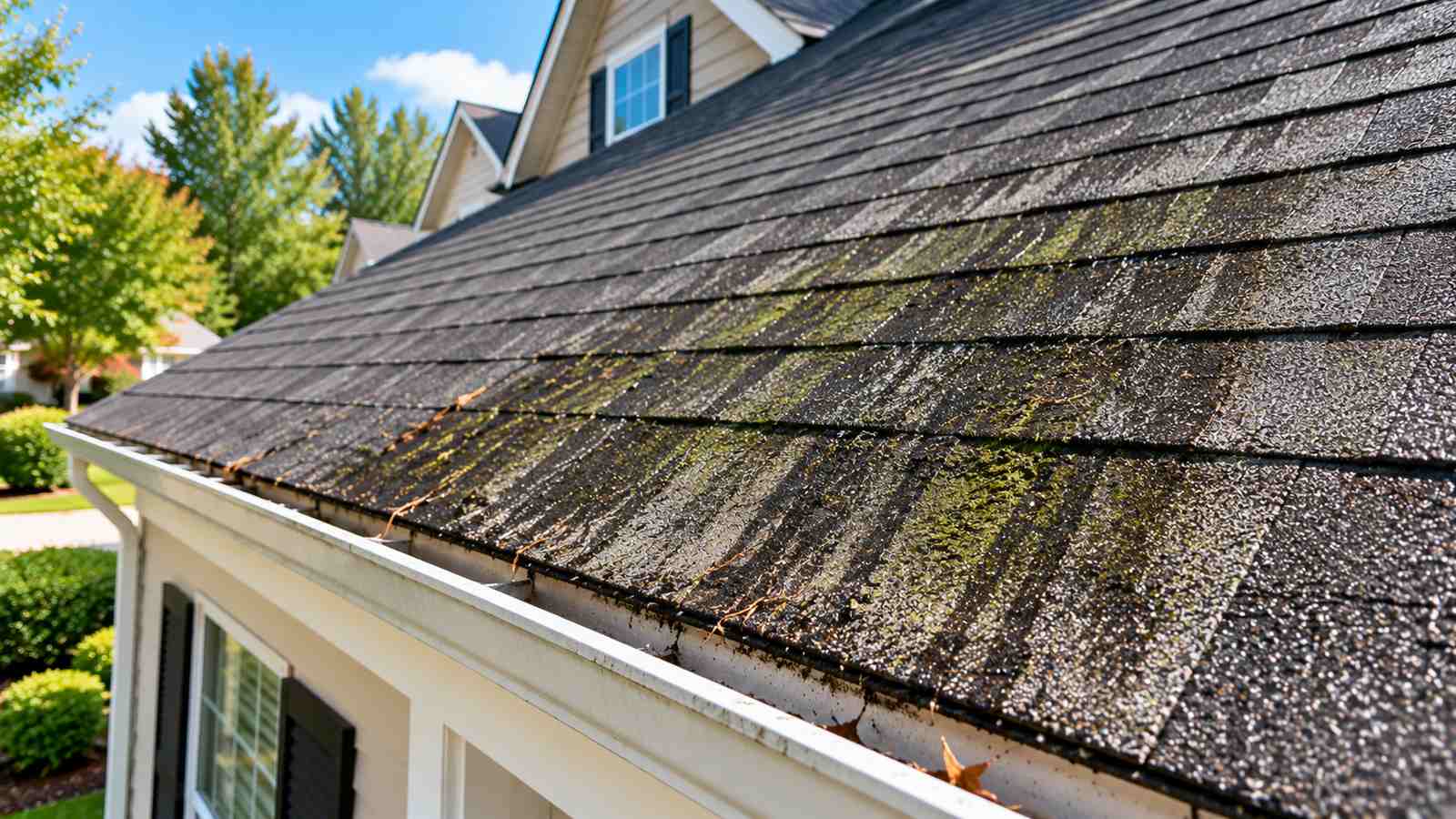
Streaks like these start on the shaded slopes and spread across the roof over a few seasons.
The same roof slope, photographed before and after the wash.
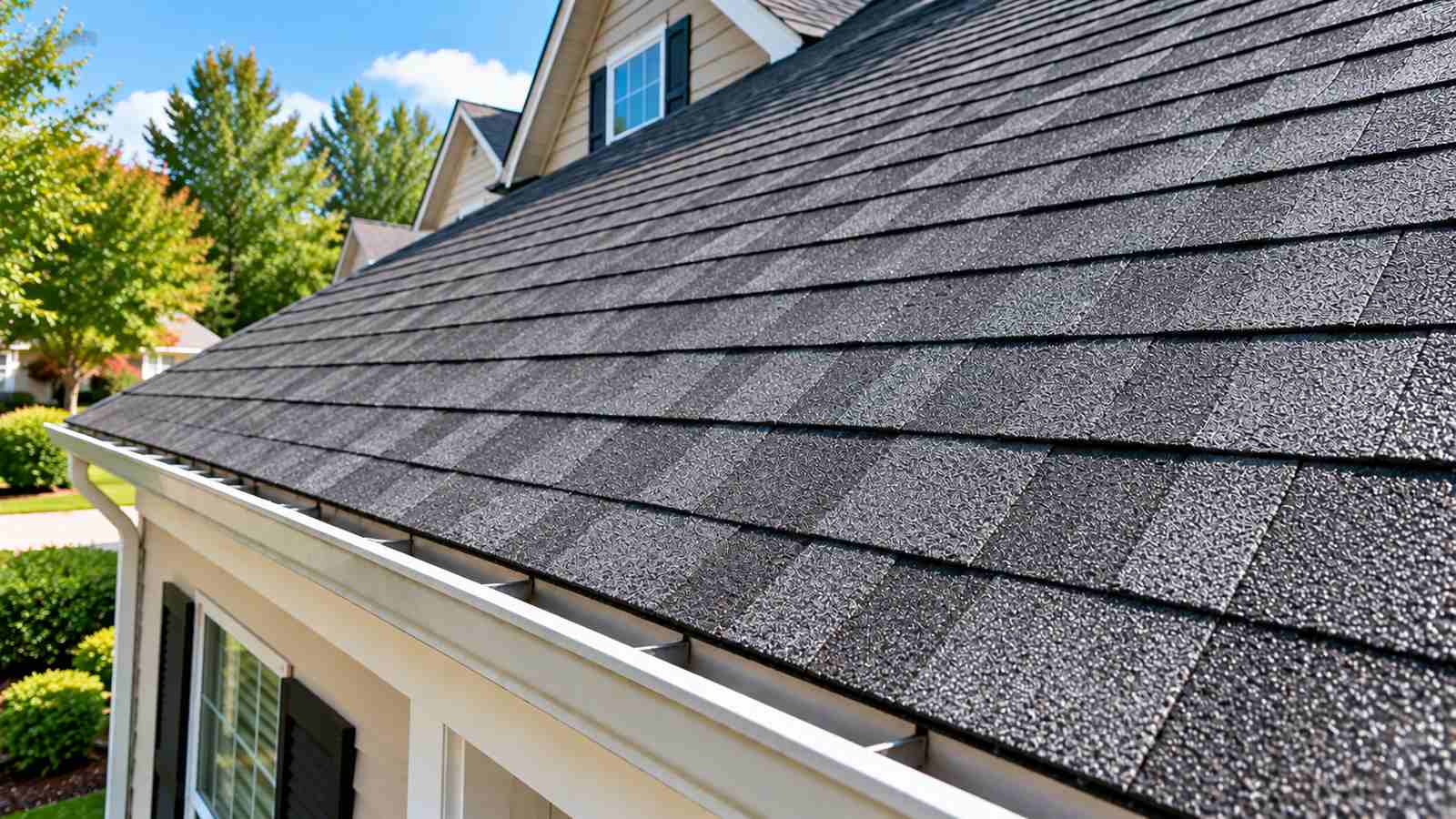
Each material gets its own cleaner strength, footing, and rinse.
| Roof type | What grows on it | How we handle it | What we watch |
|---|---|---|---|
| Asphalt shingle | Gloeocapsa magma streaks, moss at the edges | Low-pressure cleaner, no brush, gentle rinse | Granule loss, curling, and loose tabs |
| Concrete or clay tile | Algae, mildew, and lichen in humid areas | Low-pressure cleaner, careful footing, ridge-down rinse | Cracked or loose tiles, which we point out before we start |
| Metal | Mildew, pollen film, and dirt | Cleaner matched to the coating, soft rinse | Scratches, slippery panels, and fasteners |
| Flat or low-slope sections | Standing-water algae and debris | Clear debris, wash gently, check drainage | Ponding water and seams |
Not sure what your roof is made of? Tell us the color, the age, and what the roof looks like from the street. We confirm the material when we walk the property.
Most of these are visible from the driveway.
Most roofs do well with a wash every two to three years. Shade and tree cover can shorten that.
Booking them together saves a second setup and gives a cleaner result.
We start with the gutters, because the roof rinse needs a clear path off the house. After the wash, we flush the gutters and downspouts again so dead algae and shingle grit leave the system. If the gutter faces are streaked, we can brighten them in the same visit, which is easier on a roof that is already clean. Ask about gutter brightening when you book.
Roofs differ more than houses do. These are the details that move the quote.
Tell us the roof material, the number of stories, and what you see. We quote it by phone.
Call (813) 856-2726A roof wash touches everything below it, so most customers add the gutter work in the same visit.
We clear the trough first, so the roof rinse runs clean. Done together, it saves a second visit.
Gutter cleaning detailsRoof washing sends dead algae and grit down the pipes. We flush every downspout afterward so nothing packs a bend.
Downspout cleaning detailsGuards sit at the roof edge and catch the runoff first. We clean them in the same visit as the roof wash.
Gutter guard cleaning detailsA streaked roof stains the gutter face below it. Wash the roof first, then brighten the gutters so the result lasts.
Gutter brightening detailsHumidity, salt, and shade drive roof algae, and all three vary from county to county. We plan each wash around the roof in front of us.
Miami, Homestead, Florida City, Kendall
See Miami-Dade CountyFort Lauderdale, Pembroke Pines, Coral Springs, Hollywood
See Broward CountyWest Palm Beach, Boca Raton, Boynton Beach, Delray Beach
See Palm Beach CountyNaples, Marco Island, Golden Gate, Ave Maria
See Collier CountyFort Myers, Cape Coral, Bonita Springs, Estero
See Lee CountySarasota, Venice, North Port, Siesta Key
See Sarasota CountyTampa, Brandon, Riverview, Plant City
See Hillsborough CountyOrlando, Winter Park, Apopka, Ocoee
See Orange CountyJacksonville, Jacksonville Beach, Atlantic Beach, Neptune Beach
See Duval CountyTallahassee, Lake Jackson, Woodville
See Leon CountyNot sure we cover your town? Call us at (813) 856-2726 with your address.
High pressure is not. The Asphalt Roofing Manufacturers Association says high-pressure washing is likely to damage asphalt roofing. We wash roofs with low pressure and a roof-safe cleaner, so the cleaner does the work and the water only rinses it off.
Pressure washing uses force to blast dirt off a surface. Soft washing uses low pressure and a cleaning solution that kills the growth. On a roof, we use the second method and still call the service roof pressure washing because that is what most people search for.
A cyanobacterium called Gloeocapsa magma, usually just called roof algae. It lands on damp shingles, feeds on the limestone filler inside them, and spreads on the wind. The Asphalt Roofing Manufacturers Association says algae discoloration is most widespread in the Gulf States.
Done wrong, yes. Done with low pressure and no scrubbing, the shingles keep their protective granules. We never use a pressure washer on shingles, we do not brush them, and we rinse gently from the ridge downward.
Check your manufacturer's warranty, since terms vary. Many warranties exclude damage from high-pressure washing, which is the method we avoid. We follow the low-pressure approach the Asphalt Roofing Manufacturers Association recommends for asphalt shingles.
Most Florida roofs do well with a wash every two to three years. Shade, tree cover, and north-facing slopes grow algae back sooner. Algae-resistant shingles and zinc or copper strips along the ridge can slow regrowth.
Yes. Concrete and clay tile collect algae and mildew in Florida's humidity. Tile breaks if stepped on wrongly, so we plan our footing, stay off weak spots, and use low pressure. We tell you before we start if any tiles are already cracked.
Yes. Metal roofs collect mildew, dirt, and pollen, and the panels are slippery when wet. We use a cleaner suited to the coating, rinse gently, and avoid anything that scratches the finish.
We cover and wet down plants before we spray, rinse them afterward, and keep the runoff off your beds. Keep pets inside during the wash and until the rinse is done. We tell you when the area is clear.
Yes, and in a set order. We clear the gutters first so the rinse has somewhere to go, wash the roof, then flush the gutters and downspouts again so dead algae and grit do not settle in a bend.
Light rain does no harm and helps rinse the surface. The cleaner keeps working on the algae for days after the wash, so the full result often shows over the following weeks as the roof dries out.
Algae stains are cosmetic at first, and cleaning is much less work than a new roof. If the shingles are curling, losing granules, or leaking, cleaning will not fix that. We tell you what we see during the walk-around.
We serve homeowners across Florida. The counties we serve page lists each county and its main cities. If you are close to a county line, call with your address and we will confirm.
Call and tell us what your roof is made of and what you see on it. We quote by phone and find a day that works.
Call (813) 856-2726